
P20 Tool Steel: The Best Choice for Plastic Mould Manufacturing
7/9/20264 min read
Understanding P20 Tool Steel and Its Properties
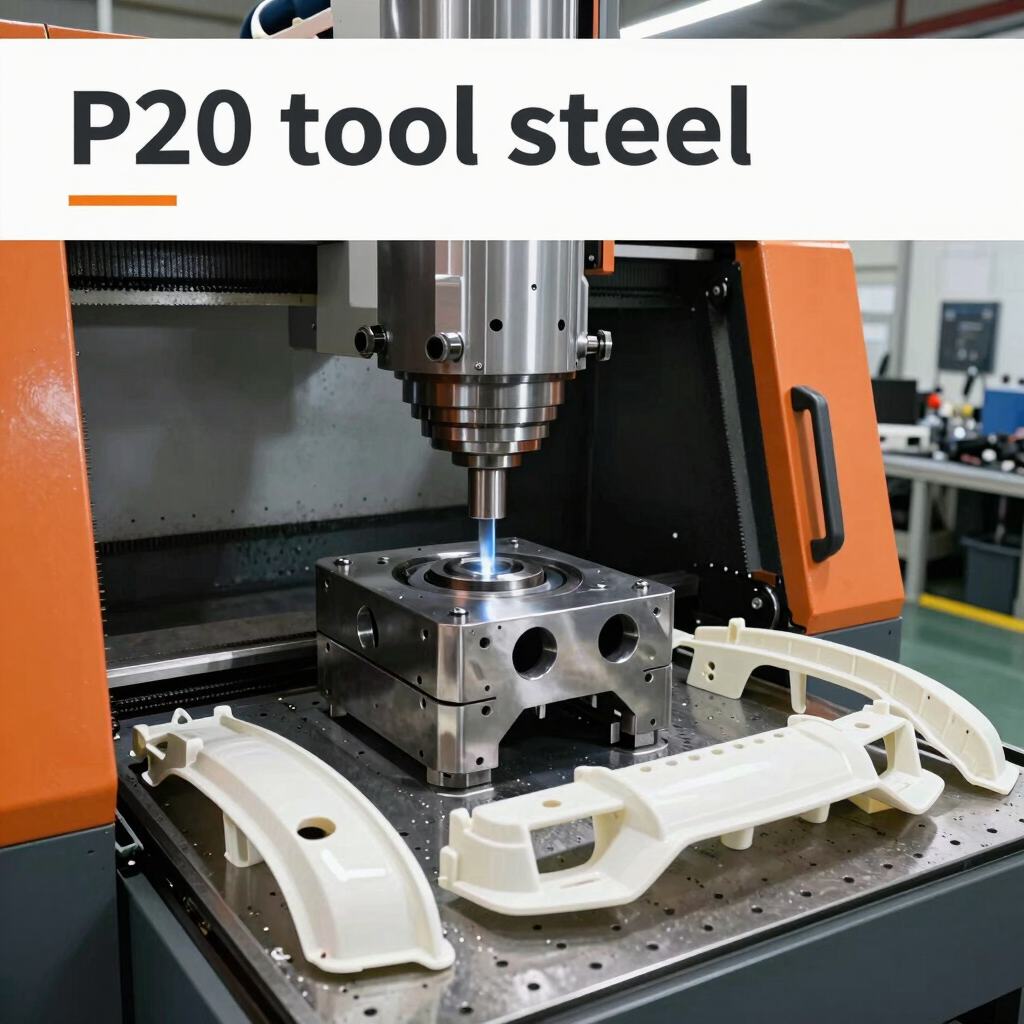
P20 tool steel is widely recognized as an exceptional material for plastic mould manufacturing, primarily due to its unique chemical composition and favorable mechanical properties. This steel is composed of a blend of chromium, molybdenum, and vanadium, contributing to its overall strength and stability. The typical carbon content in P20 tool steel ranges from 0.28% to 0.39%, which allows it to be pre-hardened to a hardness range between 28 to 32 HRC. This pre-hardened condition eliminates the need for extensive heat treatment before machining, making it a practical choice for manufacturers.
One of the standout characteristics of P20 tool steel is its optimal balance of machinability, polishability, and toughness. The steel's fine-grained microstructure enables ease of machining, allowing for the creation of complex mould designs with precision. Additionally, P20 possesses excellent polishability traits, enabling smooth surface finishes that are critical for high-quality plastic moulds. This attribute is crucial when producing parts that require a clear or visually appealing surface, such as those used in consumer products.
Furthermore, the toughness of P20 tool steel is a significant factor in its effectiveness for mould applications. It can withstand the mechanical stresses encountered during the injection moulding process without the risk of cracking or chipping. This durability ensures that moulds maintain their shape and accuracy throughout numerous production cycles, ultimately leading to lower costs and increased efficiency in manufacturing.
Overall, P20 tool steel's unique chemical composition and properties make it a favored material in the tool and die industry, particularly for plastic mould manufacturing. Its combination of ease of machinability, fine polishability, and impressive toughness solidifies its reputation as a superior choice for producing durable and precise moulding tools.
Applications of P20 Tool Steel in Mould Manufacturing
P20 tool steel is highly regarded in the mould manufacturing industry due to its superior hardness, excellent toughness, and resistance to wear and deformation. These attributes make it particularly suitable for various applications, including the production of injection moulds and blow moulds used in different sectors.
In the automotive industry, P20 tool steel is essential for creating durable and precise plastic components. Automotive manufacturers rely on injection moulds made from P20 to produce intricate parts such as dashboards, trim pieces, and housings. The ability of P20 tool steel to withstand high-temperature processing and maintain dimensional accuracy ensures the production of high-quality automotive parts, thereby contributing to overall vehicle performance.
Consumer products, such as electronics and household appliances, also benefit from P20 tool steel. Moulds crafted from this material facilitate the manufacture of various components like casings and connectors. With its excellent polishability, P20 allows for the production of aesthetically pleasing products that meet the high standards expected in consumer markets.
Moreover, the packaging industry extensively utilizes P20 tool steel in the creation of moulds for packaging solutions, including bottles and containers. This application is critical, as packaging must not only be functional but also visually appealing. The durability of P20 ensures that moulds can withstand repeated cycles without significant wear, which is vital for maintaining production efficiency.
Real-world examples showcase the effectiveness of P20; for instance, companies that produce medical devices often choose P20 tool steel for its reliability and performance in manufacturing complex moulds required for precise medical components. Case studies further illustrate how the use of P20 has led to diminished lead times and enhanced product quality across various sectors.
Comparing P20 and P20+Ni: Which One to Choose?
P20 tool steel and its variant P20+Ni have become prominent choices in the realm of plastic mould manufacturing. Understanding their differences is crucial for fabricators deciding on the best steel type for specific applications. At the heart of this decision lies the composition of each grade; P20 is known for its excellent hardness and wear resistance, whereas P20+Ni introduces nickel into the mix, enhancing toughness and impact resistance.
The standard P20 is primarily composed of carbon, chromium, and manganese, resulting in a robust material favorable for medium to large-scale mould production. Its well-balanced properties allow for reliable performance in mould applications that require regular cooling and heating cycles. In contrast, P20+Ni contains nickel alongside the basic P20 components, which helps in achieving a superior toughness, making it less prone to cracking during heavy-duty operations.
When examining typical applications, P20 is well-suited for the manufacturing of lower-stress components or where there are less stringent demands on impact resistance. This steel type works exceptionally well for producing parts like injection moulds for plastics that do not require high levels of ductility. On the other hand, P20+Ni is preferable for more challenging environments, where the moulds encounter higher pressures and impacts. It is ideal for applications such as large volume production or in situations where wear resistance is critical.
The choice between P20 and P20+Ni also extends to considerations of performance and cost. Although P20+Ni typically comes at a higher price point due to its enhanced characteristics, the long-term benefits in durability and decreased downtime may justify the investment for many manufacturers. In conclusion, evaluating specific application requirements, performance expectations, and budget constraints will lead to informed decisions when choosing between P20 and P20+Ni for mould manufacturing.
Maintenance Tips and Buyer Guidance for P20 Tool Steel
To ensure the longevity and optimal performance of P20 tool steel used in plastic mould manufacturing, proper maintenance practices are essential. First, it is crucial to maintain cleanliness throughout the operational and storage phases. After each use, moulds made from P20 should be cleaned thoroughly to remove any residue, moisture, or contaminants, which can lead to corrosion and affect the quality of the end product.
When storing P20 tool steel, the environment plays a significant role. It is recommended to keep the moulds in a dry, temperature-controlled area. This helps prevent oxidation and keeps the tool steel in peak condition. Additionally, applying a light oil or protective coating can create a barrier against potential moisture and corrosion during storage.
The handling of P20 tool steel also deserves attention. When transporting or moving moulds, it is vital to use proper packaging and handling techniques to avoid any physical damage. Implementing supports and padding can prevent unnecessary abrasions that could degrade the surface integrity of the steel.
In terms of maintenance during production, regular inspections should be a standard practice. Monitoring for any signs of wear, cracking, or deformation can allow for timely interventions, extending the helpful life of the moulds. Proper alignment and cushioning during production can further reduce stress and wear on P20 tool steel.
In purchasing P20 tool steel, sourcing from reliable suppliers is critical. A reputable supplier ensures the quality of the material, adhering to recognized industry standards. Therefore, one highly recommended supplier is Brij Steel, known for its high-quality P20 tool steel. Their commitment to excellence provides confidence for manufacturers seeking durability and reliable performance in their plastic mould applications.
About Us
Brij Steel Is founded in 1984 by Mr. Brij Mohan Gupta. We are one of the most reputable firms in the tool and alloy steel industry.
co
© 2025. All rights reserved.